
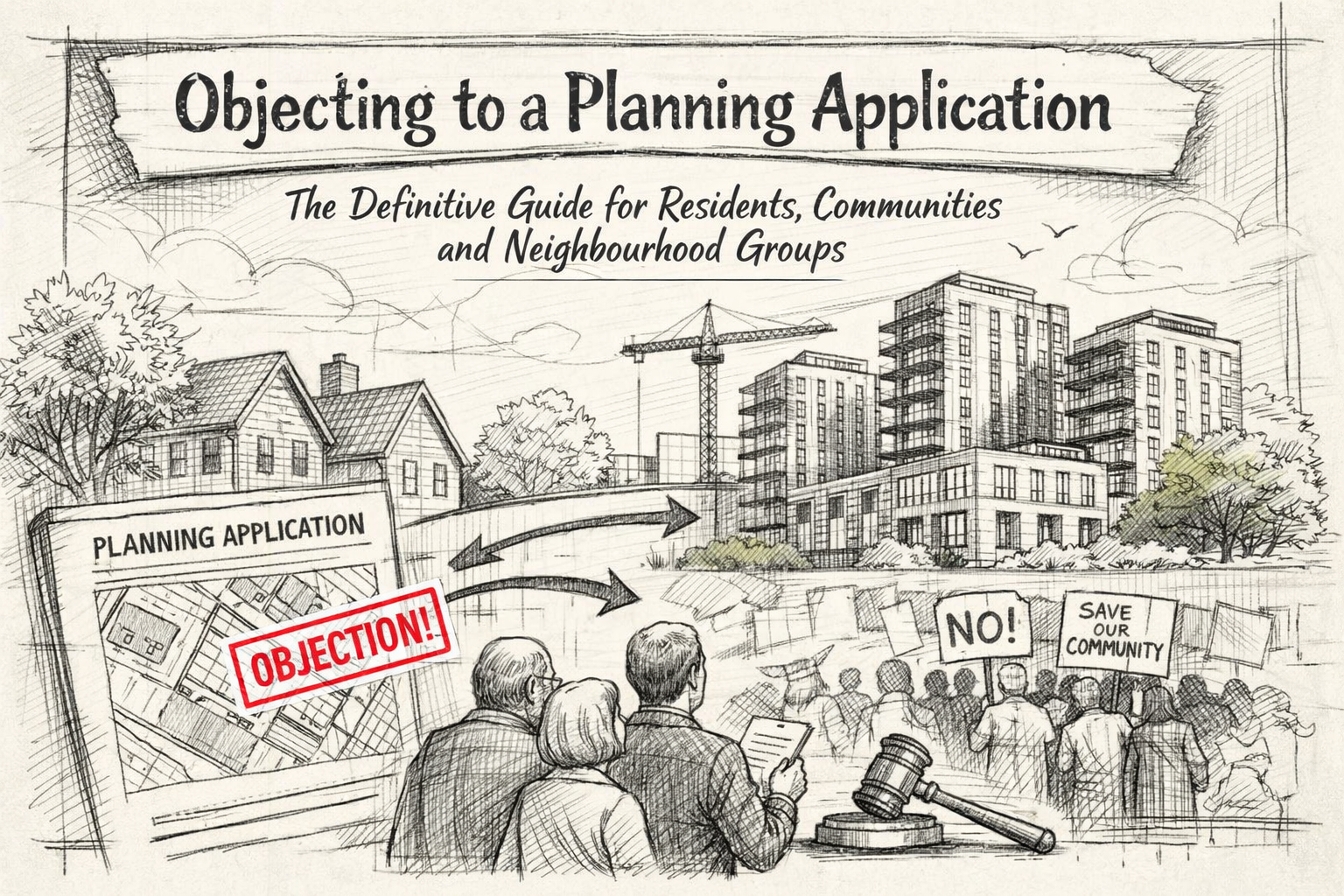
Objecting to a planning application is one of the few formal mechanisms residents have to influence development in their area. Yet many objections fail not because the concerns are unreasonable, but because they are poorly framed, unsupported by policy, or submitted too late.
This long-form guide explains how to object to a planning application properly, what planning officers actually care about, and how to maximise your chances of success. It is written for homeowners, tenants, community groups and parish councils who want to be taken seriously.
A planning application is a formal proposal submitted to a local planning authority requesting permission to carry out development. In England and Wales, most forms of development require planning permission unless they fall under permitted development rights.
Planning applications typically include:
The purpose of the planning system is not to stop development, but to ensure it happens in the right place, at the right scale, and in line with adopted planning policy.
Planning decisions are guided by:
If an application conflicts with these policies, it is vulnerable to refusal.
Public consultation is not a box-ticking exercise. Objections can and do change outcomes.
Objecting is important because:
Developers often submit optimistic proposals expecting negotiation. Well-reasoned objections shift the balance of that negotiation.
Importantly, planning authorities cannot consider issues that are not raised. If no one objects to overdevelopment, traffic impact or loss of daylight, officers may assume those impacts are acceptable.
Only material planning considerations can be taken into account. These are issues that relate to land use and the wider public interest.
Overdevelopment
Development that is too dense, cramped or dominant for its context, often failing spacing standards or local character policies.
Loss of privacy and overlooking
Windows, balconies or roof terraces that create unacceptable overlooking of neighbouring homes.
Loss of daylight and sunlight
Overshadowing that breaches guidance such as BRE daylight standards.
Highway safety and traffic
Increased traffic, unsafe access points, inadequate visibility splays or congestion.
Parking stress
Failure to meet local parking standards leading to on-street pressure.
Noise, light or odour
Particularly relevant for commercial developments near homes.
Impact on heritage
Harm to listed buildings, conservation areas or their settings.
Flood risk and drainage
Inadequate surface water management or building in flood zones.
Ecology and biodiversity
Loss of trees, habitats or failure to achieve biodiversity net gain.
A successful objection reframes personal impact as policy harm.
Understanding the process allows you to intervene effectively.
If objections raise significant planning issues, councillors can require the application to be decided at planning committee, where public speaking may be allowed.
Late objections can still be considered but carry less weight. Timing matters.
Preparation is what separates effective objections from ignored ones.
Do not rely on the site notice or neighbour letter. Read the actual documents. Pay attention to:
Planning statements often gloss over conflicts. Your job is to identify them.
Every council publishes its Local Plan online. Search for:
Quote policies directly. Planning officers work in policy language.
Evidence strengthens objections dramatically. Examples:
Evidence turns an objection from opinion into analysis.
This is where most people go wrong.
A good objection letter is:
Introduction
State the application reference number, site address and your interest (for example, neighbouring resident).
Overview
Summarise your objection in a few sentences.
Detailed objections
Break each issue into its own section. For each:
Conclusion
Request refusal or specific amendments.
Avoid emotional language, speculation or threats of legal action. Planning officers are not persuaded by volume or anger.
You can absolutely write your own objection. Many successful objections are written by residents.
However, PlanningObjection.com exists for a reason. If:
You can instruct PlanningObjection.com to write the objection for you, professionally framed against local and national policy. This significantly increases credibility and reduces the risk of missing critical points.
Think of it as the difference between representing yourself in court and hiring a barrister.
Most objections are submitted through the council’s online planning portal.
Key points:
Your objection will appear on the public planning file. This is normal.
Avoid identical template objections. Councils count issues raised, not signatures.
Strategic objections are rarely isolated.
Councillors are particularly influential. While they cannot predetermine decisions, they can:
Multiple objections raising distinct planning harms are far more effective than hundreds of identical letters.
Once submitted:
Possible outcomes:
If refused, the applicant may appeal. Objections then form part of the appeal record.
If approved, third-party appeal rights are limited, but objections still matter in shaping future enforcement and conditions.
Objecting to a planning application is not about stopping change. It is about ensuring development respects policy, context and community impact.
Successful objections are:
You can write your own objection, or you can use PlanningObjection.com to ensure your case is presented with professional weight and planning expertise.
The planning system listens to good arguments. Make yours count.